Plant science / Classroom investigation
Taller Does Not Mean Better Developed: How Light Affects Bean Plants
A three-week classroom experiment explores why plant height alone can give a misleading picture of growth.
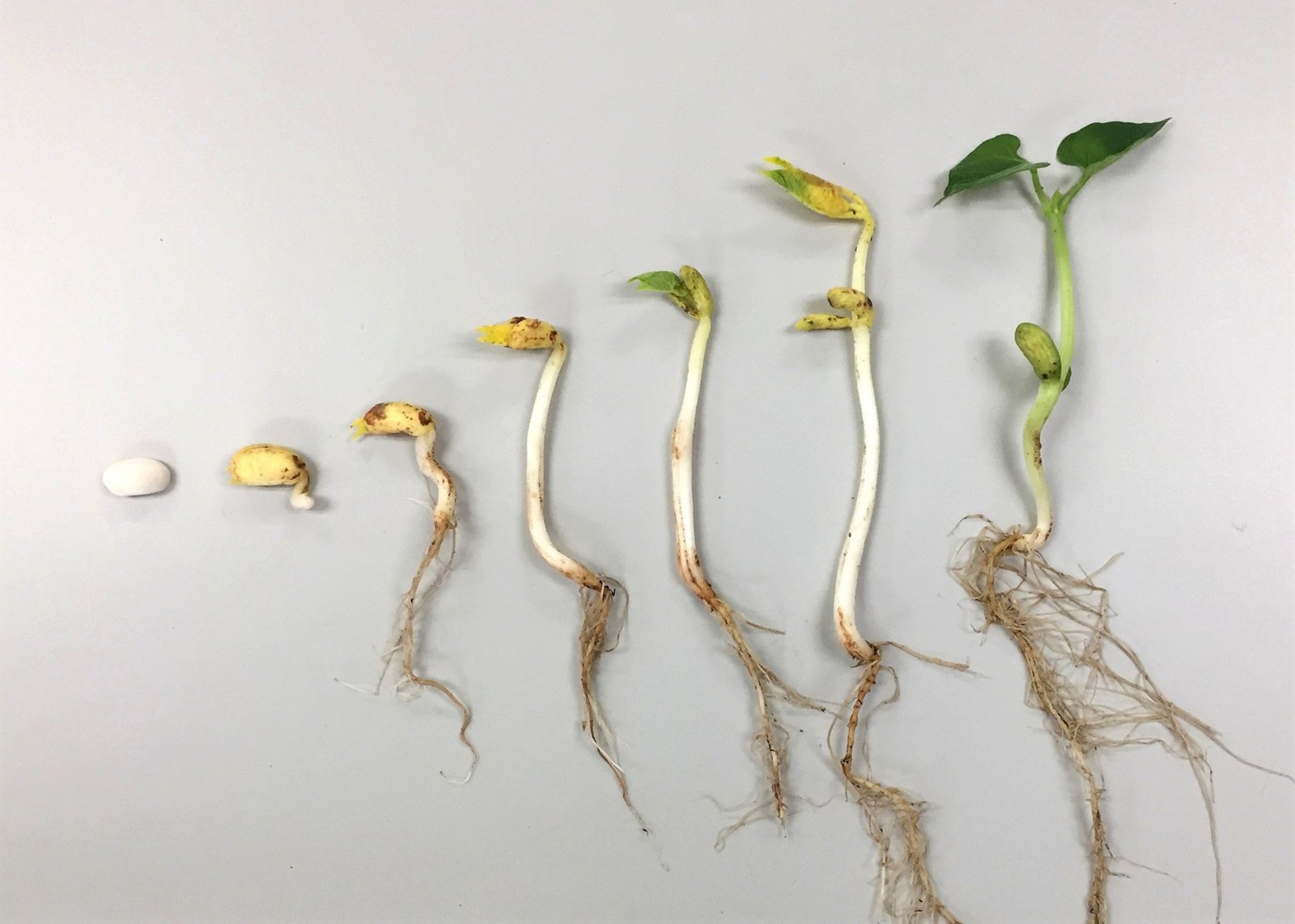
Photo: B. Domangue / Wikimedia Commons / CC BY-SA 4.0. Resized and compressed for web use; no content alterations.

How does light influence plant development, and is height alone enough to assess growth? These questions formed the basis of a classroom experiment with common bean plants (Phaseolus vulgaris), in which Aleksandar Kolev took part. For three weeks after germination, changes in plant height, leaf colour and leaf count were monitored under different light conditions.
Setting up the comparison
The plants were divided into two groups of five. The first group was placed in good natural light, while the second received limited light. The plants had similar initial sizes and were grown in identical pots with the same soil, under comparable watering and temperature conditions. This allowed the comparison to focus on light availability as the main factor being varied.
Recording the changes
Every three days, the participants measured plant height, counted the developed leaves and took photographs. They also observed leaf colour, stem appearance and the spacing between leaves.
What the plants revealed
Under limited light, the plants showed greater stem elongation. They grew taller, but their leaves were paler and they had fewer developed leaves. The wider spacing between leaves further accentuated their elongated appearance. Viewed in isolation, height measurements could therefore give the misleading impression of better development.
The plants grown in good natural light developed a more compact form. Their leaves were a deeper green and more numerous than those of the plants receiving limited light. These differences demonstrated why growth should be assessed using several indicators together.
What we can conclude
The main conclusion was that a taller plant is not necessarily a better-developed plant. Under the conditions observed, limited light was associated with elongation and paler colour, while good light was associated with more compact development and more green leaves. This conclusion applies to the plants studied and the conditions of the experiment; it does not mean that increasing light always improves growth.
Learning through observation
The project gave the participants practical experience in choosing a research method, documenting observations consistently and drawing conclusions. It also demonstrated the importance of careful comparison: a single visible indicator can tell only part of a plant’s story.